After offering our facsimile edition of Adelaide for some time, we decided to create a newly-notated modern edition as well. We love (and perform) this piece so much, that we didn't want anyone to forgo an opportunity to acquaint themselves with it merely due to the 19th century presentation of the facsimile. Now, there is a choice between the facsimile edition and a modern edition, the latter of course having the flute part in small staff in the score.
We also offer a professionally-printed hard copy edition of Adelaide for $15.75 plus a $5.95 shipping and handling fee to addresses in the USA. Please use the Contact Us form to let us know which hard copy publication(s) you would like to purchase, along with your email contact information and USPS mailing address. We will then send you a PayPal invoice for the sale and, once we receive notice from PayPal that you have paid for the item(s), we will ship your music to the address provided.
Contemporary Composition for Flute (or Alto Flute) Alone, $14.15
Mr. Bloom, in his Preface to Song for Eric Dolphy, writes: "Len Detlor (1941-2008) was an extraordinary artist whose creative vision, masterful technique, and depth of humanity transcended medium and category. As a composer, saxophonist and flutist, arranger, and music director, he was devoted to musical expression that was both elegantly structured and unconstrained." Len Detlor composed this evocative piece as a tribute to the legendary saxophonist, clarinetist, and flutist Eric Dolphy (1928-1964), whose recordings remain highly influential across musical genres and generations.
Here's a YouTube link to a 9/23/2023 performance of Song for Eric Dolphy by Peter H. Bloom:
Transcribed for Flute or Alto Flute by Peter H. Bloom, PDF $9.98
The Chaconne BWV 1004, originally from Johann Sebastian's Suite in D minor for unaccompanied violin, is among the most challenging, controversial, enigmatic, and magnificent works known. This transcription by Peter H. Bloom was created for unaccompanied alto flute in G or concert flute in C. Mr. Bloom is motivated by an interest in historical performance practice, devotion to the art of improvisation, fascination with the technique of the flute and alto flute, and an abiding love of this masterpiece of Bach's. As well as transposing and digitally engraving the original version of the Chaconne, Mr. Bloom provides practical, effective, and cogent performer's solutions to the many interpretive challenges that occur throughout this work.
Flute or Alto Flute part, 10 pages; Total, 12 pages.
The Voice and The Flute is a work composed by John H. Densmore for soprano, flute, and piano, with lyrics written by Mary Gardenia. Densmore was a native of Somerville, Massachusetts; he graduated from Harvard '04 and is perhaps best known for having composed the Harvard fight song "Veritas". Our edition of Densmore's Aria for Soprano and Flute is a facsimile reproduction of the original 1922 edition published by the composer, and contains both the piano score and the part for the voice and the flute.
Transcribed for Alto Flute and Piano by Carol A. Vater
Piano Score and Alto Flute Part, PDF $6.99
The Pièce en sol mineur for oboe (or violin or cello) with accompaniment of piano was composed by Gabriel Pierné in 1883. The alto flute is especially well-suited to this delightful, romantic piece, which falls completely and comfortably within the alto flute's range. Our edition includes both the alto flute part and the piano score.
The Cookies came about because my wife and I had been exploring the various compositions and arrangements available for flute and piano and I felt that we needed something new for our time and our audience. We live in a constantly changing world yet we love to hang our hat on the past, especially when it comes to music. I wanted to create a set of pieces that would not only be enjoyable for the listener but provide the players with a high level of satisfaction.
These pieces range in difficulty from the rather simple and easy to play (Cookies 1, 2, 4, 7), to the intermediate (Cookies 5, 8, 9, 11), and to the more challenging (Cookies 3, 6, 10, 12).
A special note about Cookie No. 5. This piece was influenced by the Jazz tunes in the popular series of Real Books which follow a common practice in today's "chart" or "lead sheets" where the melody line is written out and chords are marked for the accompaniment to play. This gives a lot of freedom initially to the piano. As the flutists becomes more familiar with their part, I would encourage them to get off the page and try some of their own lines.
I purposely gave few performance markings so that players can create their own. Interpret these freely and have fun.
Zenon Slawinski, September 17, 2014
You may listen to some short audio samples of the Cookies, recorded on the composer’s Yamaha MOTIF ES with the sampled piano and flute sounds found in the instrument.
Zenon Slawinski studied music theory and composition at the University of Michigan with Leslie Bassett, William Bolcom, and William Albright. He also studied Campanology with Hudson Ladd. After graduating with honors he pursued a career in both music and graphic design. Mr. Slawinski was co-music director for the Peabody and Ohio State award winning Children's Radio Theatre program, and scored numerous independent and industrial films and films for the Smithsonian Institution that aired at Smithsonian museums and on PBS. He wrote the music to the popular political talk show The John McLaughlin Group. Mr. Slawinski was a founding partner of a multimedia production company and recording studio working in the early interactive days on educational and entertainment music projects in the CDi and CD-ROM formats, many of which won numerous awards. For more details of Zenon Slawinski's biography, please see the Composers section of the NSM website.
Bagette no. 4 is from a set of four Bagettes written by Zenon Slawinski for his flutist wife, for the two of them to play together. The piece showcases the flute and has challenging moments for both players throughout. The spelling of "bagette" is intentional. The piece opens and closes with a quick ostinato in ¾ in the piano part that lays the foundation for the feel of the entire Bagette. The second section is more pensive and contemplative, with the piano taking the lead initially. The next section is bold and in a new key - B major - and here the flute and piano engage in a playful interaction. The composer intends for the players to put their own spin on the piece and interpret the music freely.
You may also listen to audio of the piece, recorded on the composer's Yamaha MOTIF ES with the sampled piano and flute sounds found in the instrument. Click to listen
Customers who purchase the sheet music to Bagette no. 4 are entitled to a free rehearsal mp3 of the piano track with which the flutist can play along.
Edward Elgar composed his Chanson de Matin for violin and piano c.1889-1890. The two companion pieces, Chanson de Matin (No. 2) and Chanson de Nuit (No. 1), together constitute his Op.15, and both pieces were later arranged for small orchestra by the composer. Chanson de Matin was received with great enthusiasm, and its initial and lasting popularity can be attributed largely to its strong melodic appeal. Enduring public affection for the piece has spawned the creation of numerous arrangements and transcriptions, including renditions for cello and piano, viola and piano, flute and guitar, piano solo, organ solo, and string quartet. Noteworthy Sheet Music offers two of our own transcriptions of the lovely Chanson de Matin, one for alto flute and piano and one for C-flute and piano.
Vocalises are songs without words written to provide technical challenges for singers; they are designed to develop flexibility and control, and thus often serve as vocal warm-up exercises. Gabriel Fauré composed his Vocalise-Étude in 1906, and it was published by Leduc the following year. The original piece, in the key of E minor and marked Adagio molto tranquillo, includes a piano accompaniment and incorporates various difficulties for the vocal soloist, including wide intervals, unexpected harmonies, and demanding rhythms.
Fauré's Vocalise-Étude has long been recognized as a particularly lovely and poignant piece of music, not merely a vocal exercise but a musical work of intrinsic beauty. Under its alternative name Pièce, the Vocalise-Étude has been transcribed for various orchestral instruments, including bassoon and piano, flute and piano, and oboe and harp. We at Noteworthy Sheet Music think the alto flute, with its rich, mellow tone, is the perfect instrument for this moving and somewhat melancholy Fauré melody. Our transcription for alto flute and piano is based on the version of the Vocalise-Étude for medium voice, in the key of D minor, published by Alphonse Leduc in 1907 and now in the public domain.
The Czech composer Antonín Leopold Dvořák (1841-1904) first visited England in 1884, at the invitation of the Philharmonic Society of London. He conducted several of his works there and and was commissioned to compose a new symphony for the Philharmonic Society, his Symphony No. 7 in D minor, Op.70, which he conducted in London on April 22, 1885. Dvořák, who was well-received in England for his longer works, including cantatas and oratorios, was asked by London publishers to write shorter compositions as well. The Ballada, composed by Dvořák in late 1884 shortly after he completed his Symphony No. 7, was written specifically for publication in the Christmas edition of the London Magazine of Music. It is a short work of approximately six minutes duration for violin and piano. Written in the key of D minor, the Ballad's outer sections are solemn and melancholy while the contrasting central Allegro agitato is fervid and intense. The piece works nicely on alto flute, and our transcription required few adaptations from the original violin part.
[Sources for Dvořák biographical information: Baker's Biographical Dictionary of Musicians (Eighth Edition, Revised by Nicolas Slonimsky) and the internet website http://www.antonin-dvorak.cz/en/ballad.]

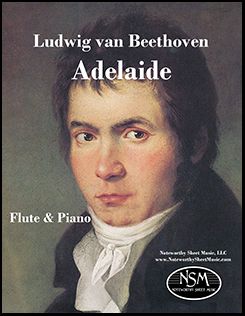 Adelaide, by Ludwig van Beethoven
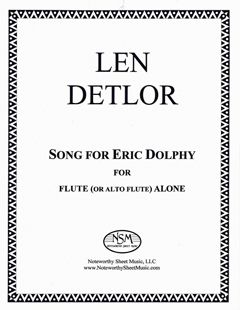 Song for Eric Dolphy, by Len Detlor
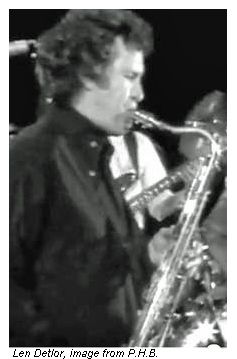 extraordinary artist whose creative vision, masterful technique, and depth of humanity transcended medium and category. As a composer, saxophonist and flutist, arranger, and music director, he was devoted to musical expression that was both elegantly structured and unconstrained." Len Detlor composed this evocative piece as a tribute to the legendary saxophonist, clarinetist, and flutist Eric Dolphy (1928-1964), whose recordings remain highly influential across musical genres and generations.
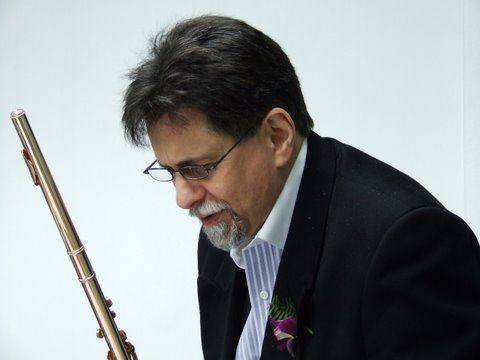 Chaconne, BWV 1004, by J. S. Bach
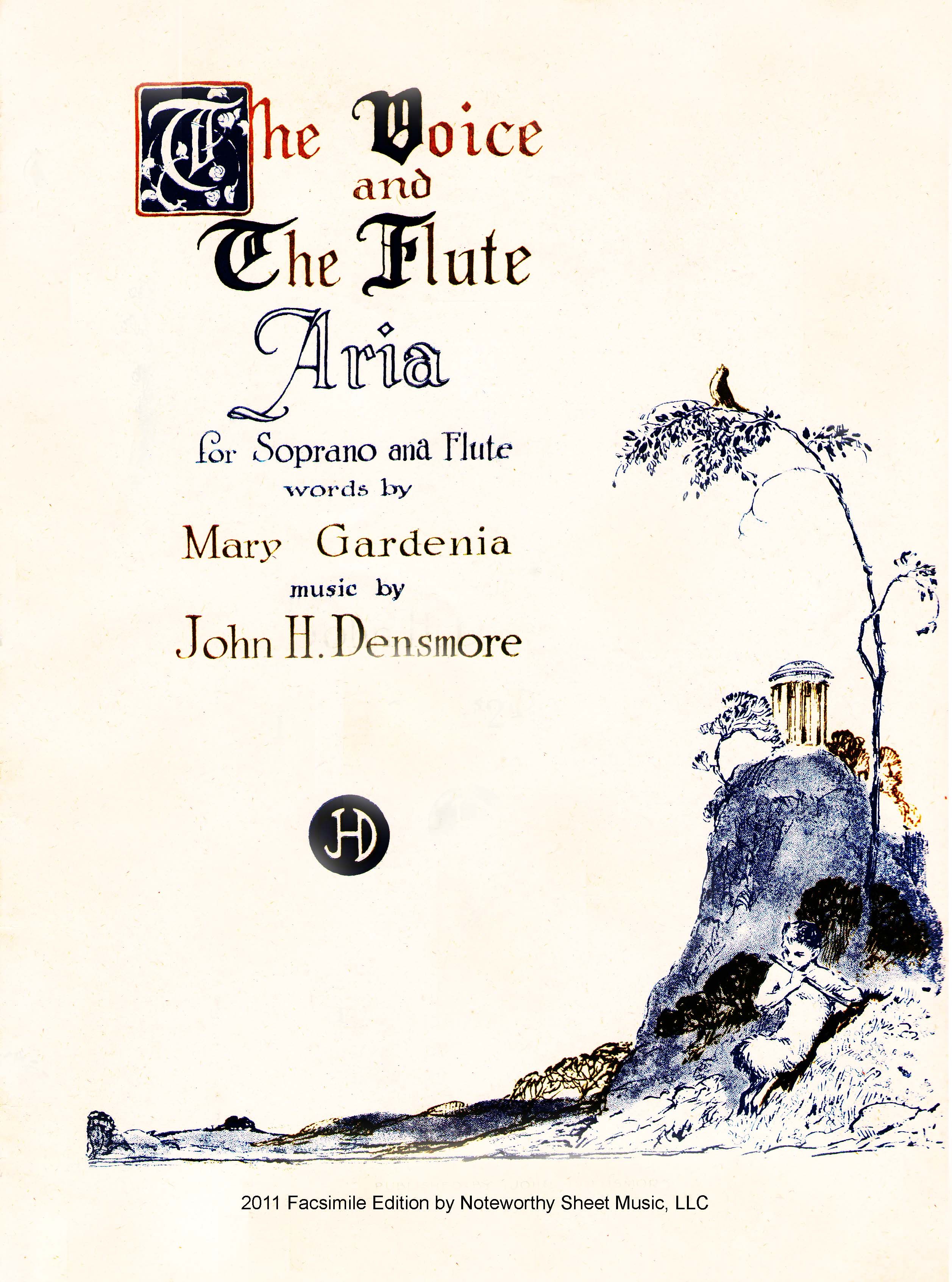 The Voice and The Flute, by John H. Densmore
 Cookies, by Zenon Slawinski
  Bagette no. 4, by Zenon Slawinski
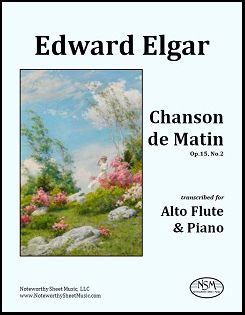 Chanson de Matin, Op.15, No.2, by Edward Elgar
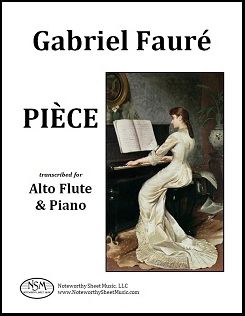 Pièce (Vocalise-Étude), by Gabriel Fauré
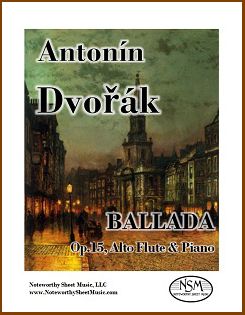 Ballada, Op. 15, by Antonín Dvořák